In an increasingly competitive market, technology has moved from a supporting role to the center of corporate strategy. For companies looking to grow, gain efficiency and strengthen customer relationships, simply keeping up with trends is no longer enough. The real competitive edge lies in applying technology with intelligence, context and business vision.
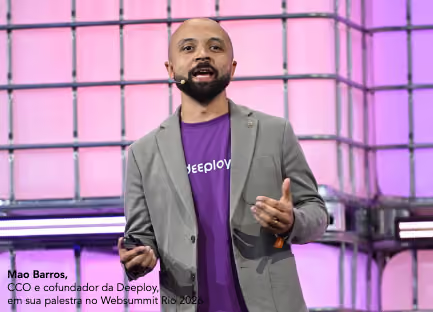
According to Mao Barros, CCO and co-founder of Deeploy, a consultancy specializing in the global recruitment and placement of Product, UX and Digital Design professionals, the rise of AI demands a more strategic reading from companies. AI speeds up processes, expands analytical capacity and supports decision-making — but it only delivers real returns when backed by organized data, clear objectives and replicable processes.
Adopting new technology also comes with operational responsibility. If an automated system is pulled from a process, the business can't grind to a halt. Technology should strengthen an organization, not create dependencies on systems few people understand. The real challenge is building usage models that make sense for operations, teams and customers alike.
This is where UX and Product Design step into a strategic role. When a company invests in AI, automation or new solutions, user experience shouldn't be treated as a final finishing touch. UX is the layer that turns technical capability into understanding, understanding into trust, and trust into adoption.
The role of Product and UX professionals goes well beyond designing screens or interfaces. They translate business goals into clearer journeys, reduce friction, interpret user behavior and steer technology toward solving real problems. In sectors such as retail, financial services, brokerages, healthcare, education and manufacturing, this perspective shapes conversion, retention, reputation and operational efficiency.
As more companies gain access to similar technologies, the competitive differentiator shifts to the people who know how to ask the right questions, read context and make decisions aligned with human behavior. Real productivity isn't about outsourcing the thinking part of the work — it's about automating tasks to free people up for more meaningful decisions.
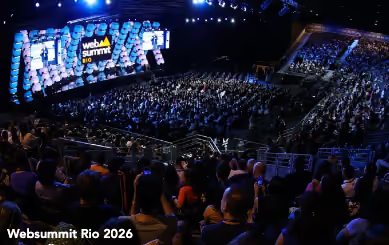
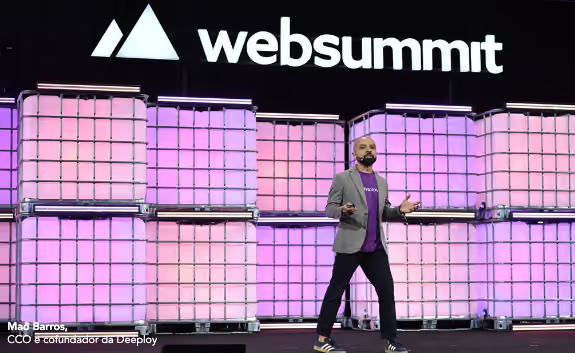
This perspective was at the heart of the talk Mao Barros gave at Web Summit Rio 2026, where Deeploy explored the role of Product and UX professionals in building businesses capable of turning technology into trust, experience and real value.